
Our newsletter
Dear allies,
Two pieces of excellent news this week: the rejection by Scottish parliamentarians of a form of assisted suicide, and the introduction of a bill in Alberta proposing a wide range of new safeguards that could inspire other jurisdictions in Canada
and around the world.
We also revisit the follow-up to our press release from Monday on the scheduled end of the exclusion of MAiD for mental illness in Canada on March 17, 2027: two interviews and a call to action.
Spring 2026 is shaping up to be particularly busy — thank you for your continued support!
Jasmin Lemieux-Lefebvre
Coordinator
Living with Dignity citizen network
A promising new bill in Alberta
“Safeguards
for Last Resort Termination of Life Act”: this is the name of the bill
introduced on Wednesday, March 18th in Alberta.
We invite
you to review Bill 18:
https://www.alberta.ca/release.cfm?xID=958511A2CE817-A924-E2A6-0D101236984ADB16
as well as the press conference by Alberta Premier Danielle Smith, Dr. Ramona
Coelho, and Justice Minister Mickey Amery:
https://youtu.be/NIhBOwBRDMc?si=hJAjA_OPQVl7Q0XZ
We would
like to draw your attention to Dr. Coelho’s remarks throughout the press
conference. Among others:
“But from the beginning, the disability
community, indigenous community, many legal and medical experts have warned our
federal government about the risks of legalizing MAiD without considering
balancing the safety of vulnerable patients.”
“When the outcome is death, the system must
meet the highest standard of care, scrutiny, and accountability.”
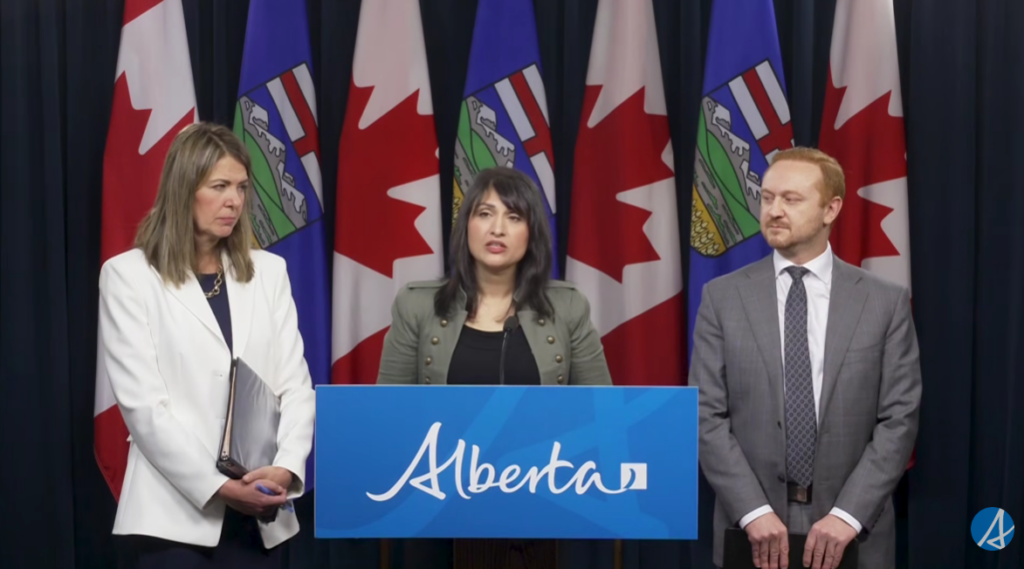
Dr. Coelho is part of the MAiD review team at the Office of the Chief Coroner of Ontario and is co-editor of Unravelling MAiD in Canada: Euthanasia and Assisted Suicide as Medical Care, published by McGill-Queen’s University Press with Prof. Trudo Lemmens and Dr. K. Sonu Gaind.
The situation leading Alberta to propose such a bill is not different from that of Quebec. Quebec already excludes mental illness from its end-of-life care legislation, and some of the proposed measures would be difficult to apply in Quebec due to the Gladu–Truchon decision. For example, Alberta seeks to make MAiD available only to individuals whose death is reasonably foreseeable within the next 12 months.
Other options proposed by the province are, however, conceivable, such as these two:
- Healthcare professionals would be prohibited from proactively
suggesting MAiD to patients and could only discuss it if the
patient raises it first. - A ban on displaying information about MAiD in healthcare
institutions, in order to reduce any influence or pressure on patients.
We look forward to following for you the evolution and the future impact of this bill.
Scotland says no
The
Scottish Parliament rejected this week the legalization of “assisted dying” by
a vote of 69 to 57.
As Ségolène
Perruchio of the French Society for Support and Palliative Care (SFAP) noted
on LinkedIn, the legalization of MAiD / euthanasia / assisted suicide “is
not an inevitable progress moving in the direction of history.”
For his
part, Scottish physician Jonny Blackwell, who worked hard to defeat the bill, welcomed the
result:
“Scotland
is brighter this morning.
I was deeply moved by stories both for and against.
I hope Scotland will now invest properly in comprehensive palliative,
psychiatric and social care so nobody will ever want assisted suicide.
We chose the harder but better path. Let’s walk it!”
MAiD and mental illness: follow-up to our Monday release
Following our press
release “In one year: end of the exclusion of MAiD for mental illness in
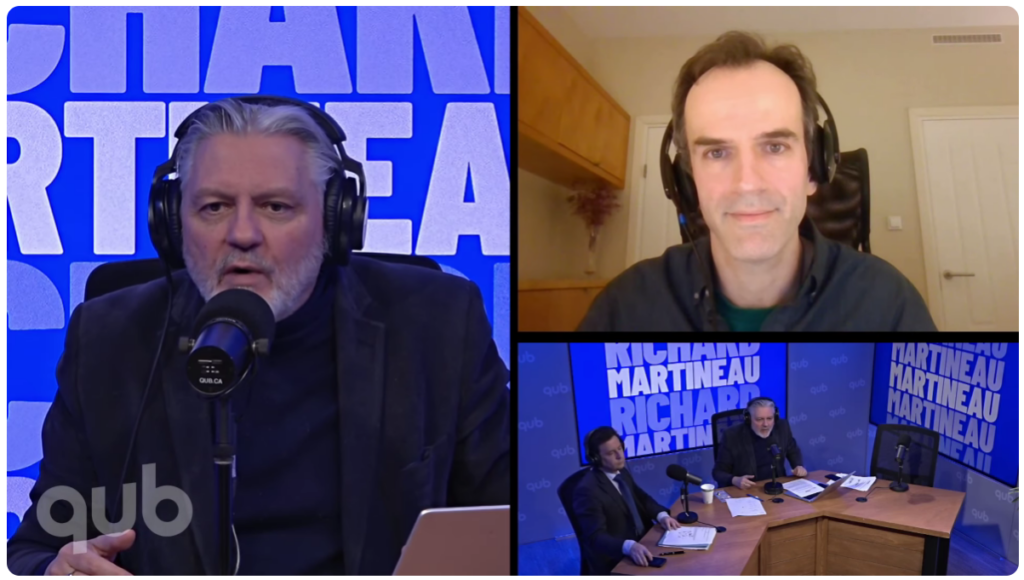
Canada,” we obtained two media interviews (in French):
With
Richard Martineau on QUB Radio:
https://youtu.be/sLRoY1GT4LE?si=eJu05VNlXQk6Gc2R
With Michel Bédard on the program Les Capés (CKIA):
At 46:51, https://www.facebook.com/lescapesckia/videos/26718347807770946/
We will closely monitor the work of the Joint Committee on Medical Assistance in Dying (AMAD). However, the safest way to block this expansion is undoubtedly Bill C-218, which we discussed in our release.
We invite you to contact your Member of Parliament to let them know – even briefly – the reasons for your support of Bill C-218. Since support from Conservative, NDP, and Green MPs can be expected, the outcome of the vote will depend on the number of Liberal MPs willing to support it. If your MP is Liberal, you
should write to them.
To find your MP’s contact information:
https://www.noscommunes.ca/members/en
We encourage you to emphasize the four main concerns that led the AMAD Committee to recommend maintaining the exclusion of MAiD for mental illness:
- The issue of irremediability:
“…difficult, if not impossible, to accurately predict the long-term prognosis of a person with a mental disorder”. - The difficulty of distinguishing such MAiD requests from suicidality.
- The lack of professional consensus.
- The impact on protecting vulnerable persons.
Thank you for taking this simple step!
Trudo Lemmens’ conference in Montreal this Saturday
The Physicians’ Alliance Against Euthanasia invites you to a lecture by Professor Trudo Lemmens, Professor and Scholl Chair in Health Law and Policy, University of Toronto:
“Serious issues in MAiD practice: where are the sanctions?”
(IN FRENCH)
Saturday, March 21, 2026 at 3:30 p.m.
Sherbrooke Pavilion, UQAM, 200 Sherbrooke West, Montreal, Room SH-3220
https://plancampus.uqam.ca/pavillon-sh
Free admission
After presenting at McGill University on March 20th, Professor Lemmens will discuss on Saturday issues related to the current practice of MAiD in Canada, informed in part by evidence from Ontario.
MAR
2026